Have you ever seen a Mercedes with a warped chassis because someone used the wrong lift? It’s not pretty. And in Dubai, where the roads are smooth but the stakes are high, especially with AMG beasts and luxury SUVs, Mercedes Lift Systems are not just tools; they’re the backbone of every serious workshop.
We’ve had clients roll in with suspension misalignment, underbody stress fractures, even cracked welds, all because someone rushed the elevation process. That’s why we don’t mess around. Whether it’s a hydraulic lift, scissor lift, 2-post lift, or 4-post lift, the system you choose directly affects the vehicle’s structural integrity. Mercedes Lift Systems are designed to work with specific weight distributions, chassis geometries, and underbody layouts. They’re not universal. They’re not forgiving. And they’re not optional
Why Chassis Integrity Matters in Mercedes Vehicles?
You know what’s worse than a misdiagnosed engine fault? A bent chassis that no one noticed until the suspension started acting up. We’ve seen it happen, especially with Mercedes models that were lifted wrong. One careless elevation, and the entire structural alignment goes off.
Mercedes Lift Systems are built to distribute weight across specific chassis stress points. Miss those, and you’re not just tweaking the frame, you’re throwing off the suspension geometry, misaligning the drivetrain, and compromising the car’s ability to absorb road forces.
We had a GLC come in last month. Looked fine on the surface. But the moment we ran frame diagnostics, the readings were off by a few degrees. Turns out, the previous shop used a generic lift with uneven arms. The result? Twisted underbody, misaligned control arms, and a repair bill that could’ve been avoided.
Fact: Mercedes chassis are engineered with high torsional rigidity. Improper lifting introduces micro-fractures that worsen over time.
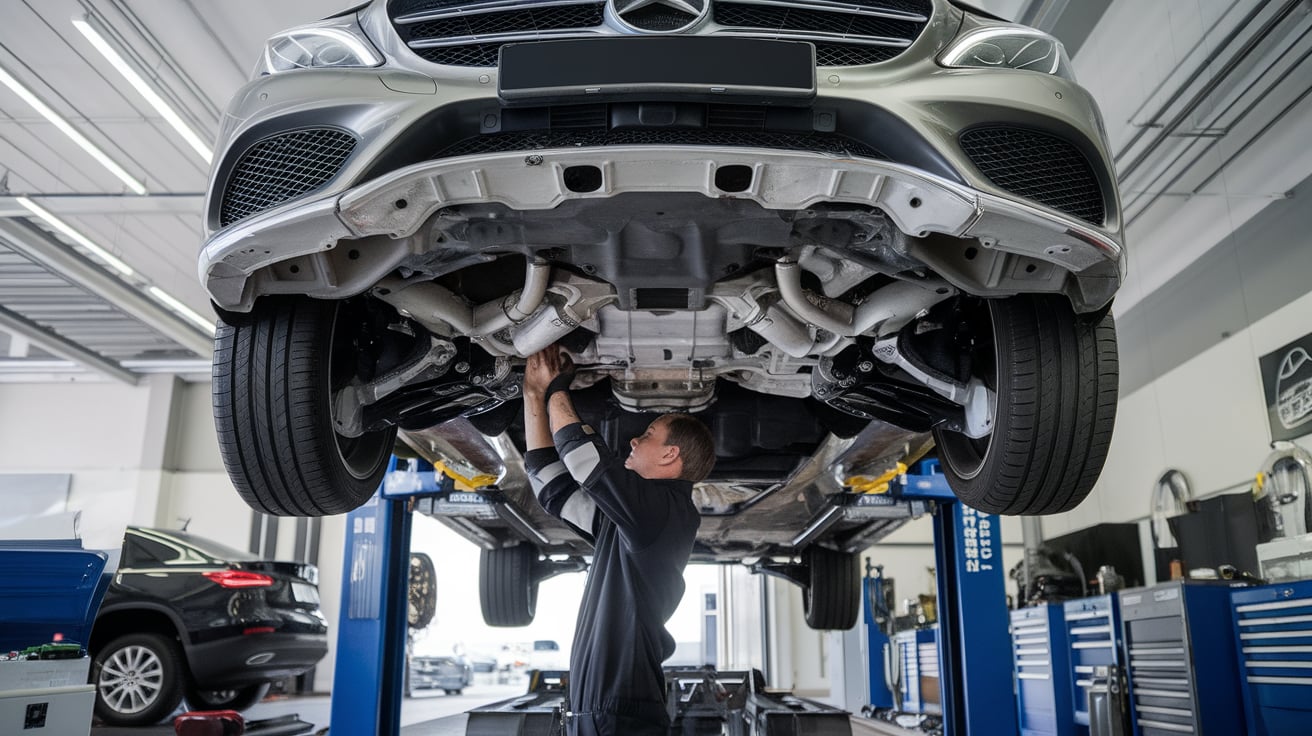
And it’s not just about damage. Poor lift technique limits underbody access, making it harder to inspect brake lines, exhaust mounts, and subframe bolts. That’s not just inconvenient—it’s dangerous. Lift Systems are not optional. They’re the difference between precision and guesswork.
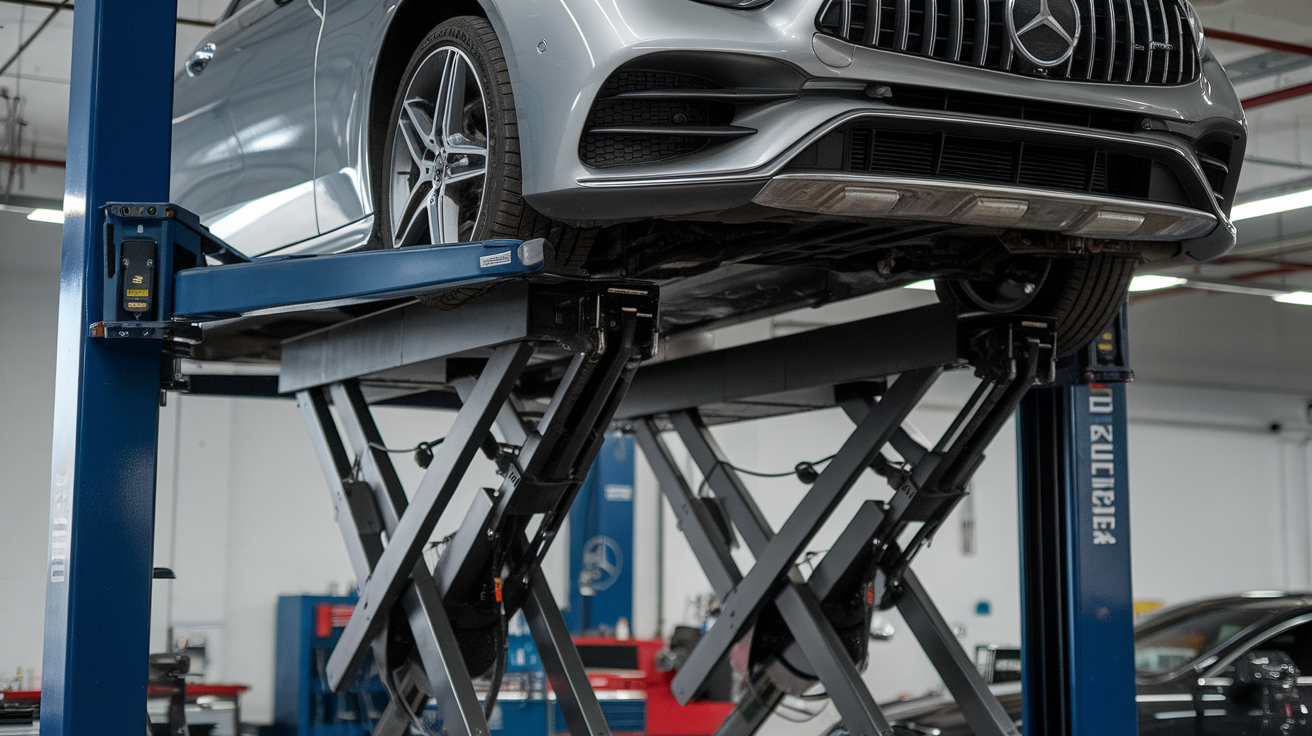
Types of Mercedes Lift Systems Used in Professional Workshops
Not all lifts are created equal. And when you’re working on a Mercedes, especially in Dubai, where high-performance models are the norm, you need more than just a generic elevation tool. You need precision. You need reliability. You need Lift Systems that match the car’s engineering. We’ve tested them all. Some work beautifully. Others? Not so much. Here’s how we break it down.
Two-Post Lifts for Mercedes Sedans
These are the workhorses. Compact, efficient, and ideal for mid-weight vehicles like the C-Class or E-Class.
- Lift capacity: Usually around 8,000–10,000 lbs
- Arm configuration: Symmetrical or asymmetrical arms, depending on the wheelbase
- Lift pad placement: Critical, must align with reinforced jack points
They’re great for underbody access, brake jobs, and suspension work. But they require a solid concrete base and precise installation. One of our techs once lifted a CLA with misaligned arms. result? Twisted subframe. Lesson learned. Mercedes Lift Systems, like the SMART LIFT 2.35 SL, use double telescopic arms to handle variable chassis lengths. That’s a game-changer.
Four-Post Lifts for SUVs and AMG Models
These are built for bulk. GLEs, GLSs, and AMG GTs need full platform support.
- Lift capacity: Up to 14,000 lbs
- Arm configuration: Platform-based, no swing arms
- Use case: Ideal for wheel alignment, exhaust work, and long-term storage
They’re stable, but not great for suspension work unless paired with jacking beams. We use the POWER LIFT HDL 6500 SST DG for heavy-duty Mercedes SUVs. It’s wide, it’s strong, and it doesn’t flinch. Mercedes Lift Systems in this category are about brute strength with finesse.
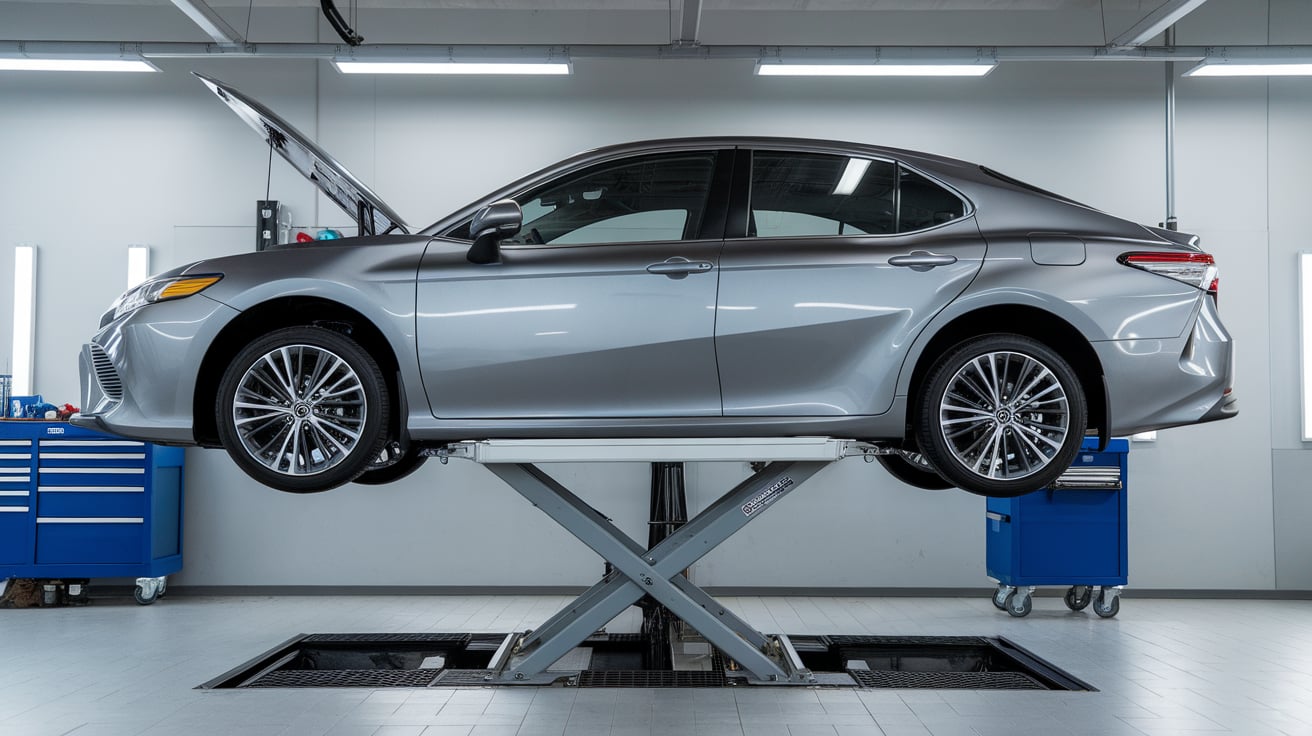
Scissor Lifts for Low-Profile Vehicles
Ever tried lifting an AMG GT with a two-post? Risky. That’s where scissor lifts shine.
- Lift capacity: 6,000–9,000 lbs
- Lift pad placement: Must be dead-on; low clearance means no room for error
- Use case: Quick inspections, tire changes, detailing
We use the JUMBO LIFT 3500 HF X-Tend. It’s got double platform extensions for wide-body kits. Perfect for Dubai’s tuned Mercedes crowd. Mercedes Lift Systems like these are compact, fast, and ideal for low-slung performance builds.
In-Ground Lifts for Space Optimization
Space is money. In-ground lifts save both.
- Lift capacity: Varies, usually 8,000–12,000 lbs
- Arm configuration: Retractable arms or platform
- Use case: Full-service bays, luxury showrooms, high-end garages
We installed one in our downtown Dubai location. It’s flush with the floor, looks clean, and handles everything from A-Class to S-Class. Maintenance is higher, but the workflow efficiency? Worth it.
Mercedes Lift Systems’ in-ground setups are for shops that want performance without clutter. Mercedes Lift Systems are not one-size-fits-all. Choose wrong, and you’re not just slowing down service, you’re risking the car.
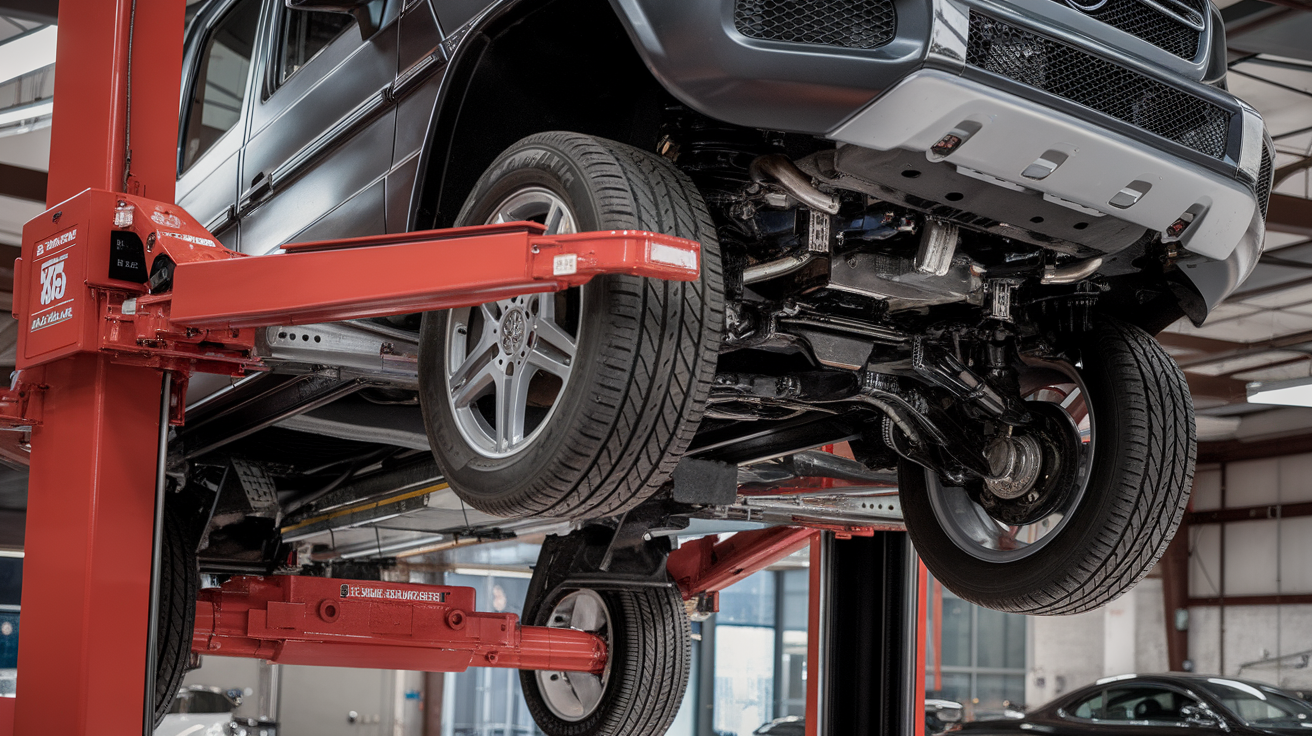
Load Distribution and Lift Pad Placement for Mercedes Chassis
Lift a Mercedes wrong, and you might not see the damage right away. But give it a few weeks, suspension starts pulling, alignment drifts, and suddenly the steering feels off. That’s not wear and tear. That’s a chassis fighting against itself.
Mercedes Lift Systems are engineered to distribute weight across reinforced zones. These aren’t just random spots under the car. They’re mapped to absorb vertical force without flexing the frame. Miss those zones, and you’re introducing stress into areas that were never meant to carry a load.
We had an S-Class roll last winter. Looked fine. But the moment we checked the torsional rigidity, the readings were off. Turns out, the previous lift job placed pads too close to the rocker panels. The result? Crushed trim, warped underbody, and a repair that cost more than the original service. Here’s what we follow in our Dubai workshop:
- Front lift pad alignment: Just behind the front wheels, under the reinforced jack point covers
- Rear lift pad alignment: Forward of the rear wheels, near the subframe anchor points
- Load balancing: Use symmetric arm configuration for sedans, asymmetric for coupes and convertibles
Mercedes Lift Systems, like the 2-post asymmetric setup, require precise jack point mapping. We use laser guides to ensure pad contact is dead center. No guesswork. And if you’re lifting a performance model? Double-check everything. AMG frames are stiffer, but less forgiving. One slip, and you’re chasing phantom vibrations for weeks. Mercedes Lift Systems are not just about elevation. They’re about protecting the geometry that makes these cars drive like they do.
Lift System Compatibility by Mercedes Model Class
Have you ever tried lifting a GLE with a two-post lift meant for sedans? It’s like trying to bench-press a truck with one arm. Doesn’t end well. In Dubai’s high-performance workshop scene, matching Mercedes Lift Systems to the right model class isn’t just smart, it’s survival.
Each Mercedes model has its wheelbase, ground clearance, and chassis load zones. That means the lift system has to be tailored. Not guessed.
Compact Class | A-Class, CLA
These are light, nimble, and low to the ground. But don’t let that fool you.
- Recommended lift: Asymmetric 2-post or compact scissor lift
- Lift arm reach: Shorter arms with adjustable pads
- Ground clearance: Low, watch for rocker panel contact
We use the TwinArm SL 2500 for these. It’s fast, precise, and doesn’t overwhelm the chassis. Mercedes Lift Systems for compact models need finesse, not brute force.
Mid-Size Class | C-Class, E-Class
These are the bread-and-butter of Dubai’s executive fleet. Heavier than they look.
- Recommended lift: Symmetric 2-post or platform scissor
- Lift pad placement: Reinforced zones near the subframe
- Wheelbase considerations: Moderate, arm extensions may be needed
C-Class models often come with AIRMATIC suspension. That means extra care during elevation to avoid sensor misalignment.
Mercedes Lift Systems here must balance access with stability.
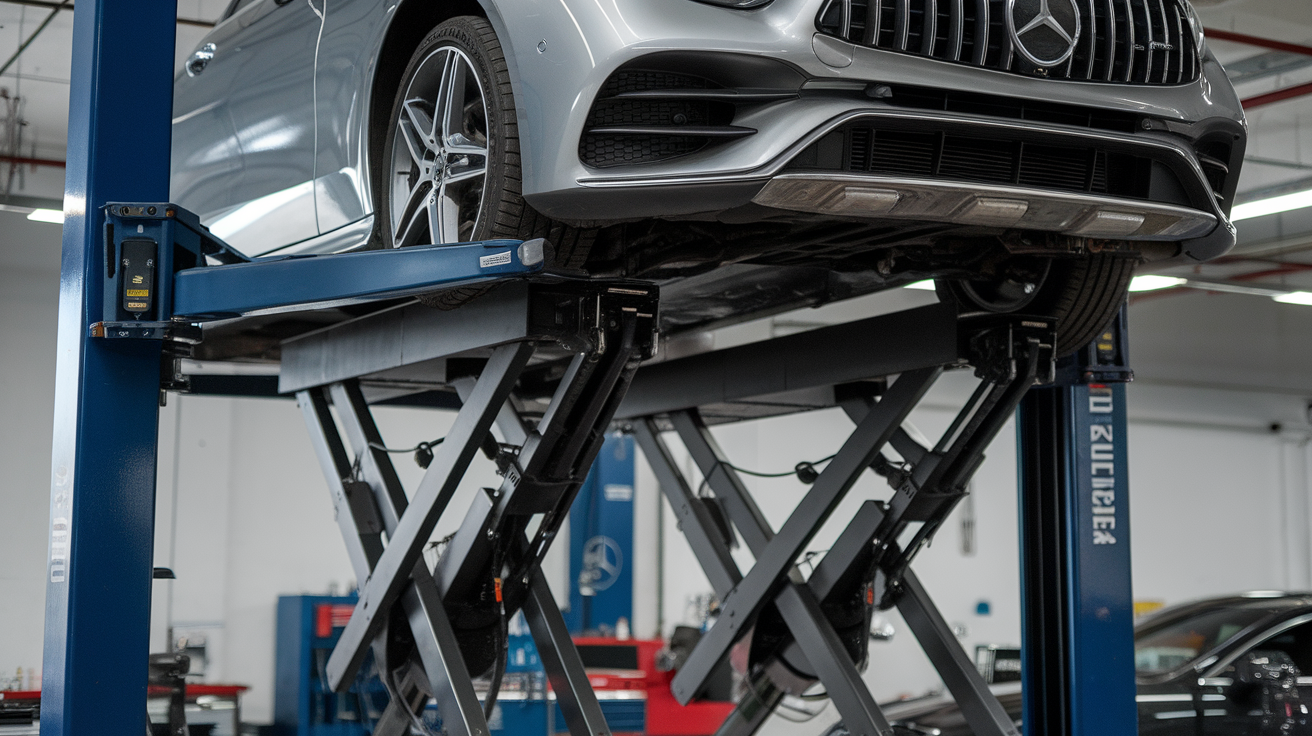
SUV Class | GLC, GLE, GLS
Big. Tall. Heavy. And full of surprises.
- Recommended lift: 4-post with jacking beams or in-ground platform
- Lift capacity: Minimum 12,000 lbs
- Arm configuration: Platform-based, no swing arms
We had a GLS Maybach last month. Needed full underbody access. Our in-ground lift handled it like a charm. No drama. Mercedes Lift Systems for SUVs must be built for load, not just reach.
Performance Class | AMG GT, S-Class
These are low-slung, wide-bodied, and unforgiving.
- Recommended lift: Extended scissor or low-profile in-ground
- Lift pad placement: Must align with AMG-specific jack points
- Torsional rigidity: High, any flex causes vibration issues
We use the X-Tend 4000 HF for AMG GTs. It’s got double platform extensions and laser-guided pad alignment.
Mercedes Lift Systems for performance builds are all about precision. One slip, and you’re chasing phantom rattles for weeks. Mercedes Lift Systems are not interchangeable. Match the lift to the model, or risk turning a luxury repair into a liability.
Safety Protocols for Operating Mercedes Lift Systems
Let’s be honest, Mercedes vehicles aren’t forgiving when it comes to lifting errors. One slip, one misaligned pad, and you’re looking at a bent control arm or worse, a cracked subframe. That’s why Mercedes Lift Systems demands more than just button-pushing. They demand discipline.
Before we even touch the controls, we run a lift inspection. Not a glance. A full checklist. Hydraulic lines, arm locks, safety interlocks, and platform stability. If anything’s off, we don’t lift. Simple. Here’s how we train our techs in Dubai:
- Daily load testing: Simulate lift with ballast before the first vehicle
- Emergency lowering drills: Every technician must know how to drop the lift manually
- Lift lock mechanisms: Must engage automatically; manual override is for emergencies only
- Pad alignment checks: Use laser guides or mechanical stops to avoid drift
We had a case where a new hire skipped the lock check. The lift dropped half an inch mid-service. No damage, but it shook everyone up. That’s why we drill safety like it’s a sport. Mercedes Lift Systems are precise machines. Treat them casually, and they’ll remind you why they’re not just tools, they’re part of the car’s protection system.
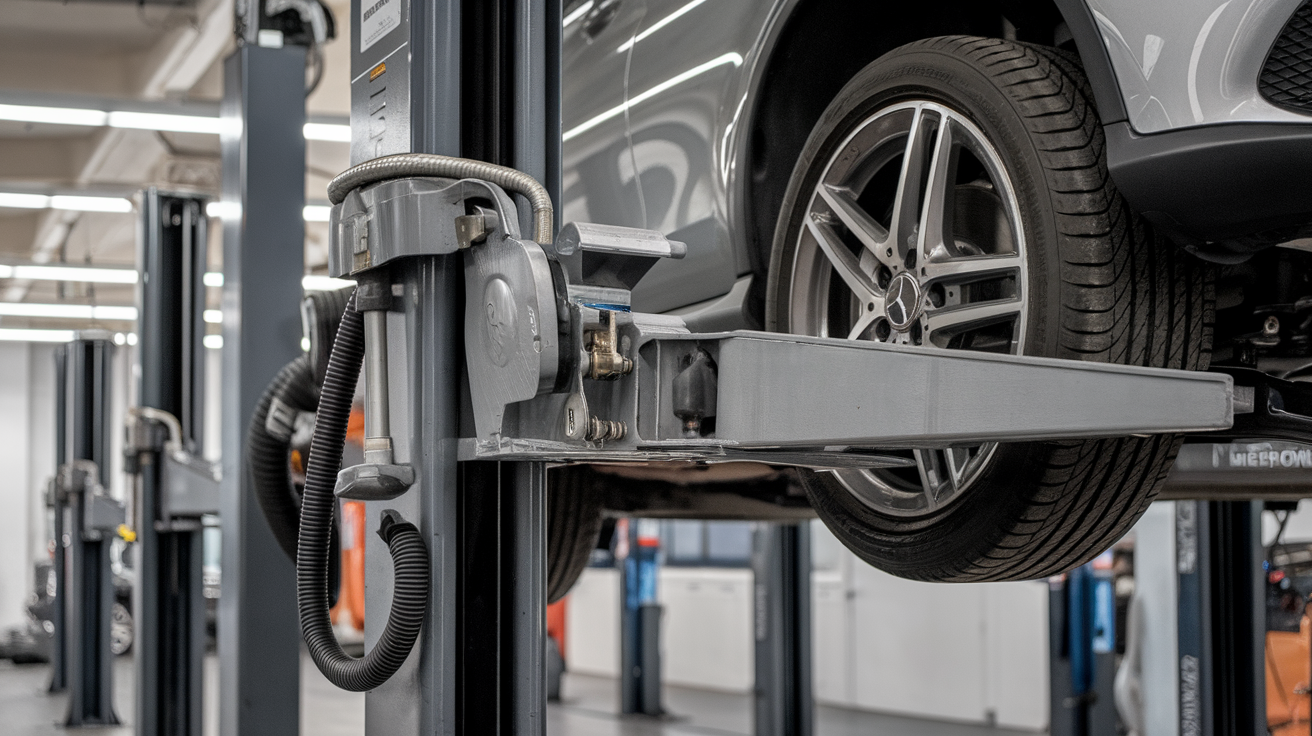
Common Lift System Failures and Their Impact on Mercedes Repairs
Lift failures don’t always come with a bang. Sometimes, it’s a slow leak. A pad that shifts half an inch. A hydraulic hiss that gets ignored. And then? A misaligned chassis, a delayed repair, and a client wondering why their Mercedes feels “off.”
We’ve seen it firsthand. A GLE came in last quarter, routine brake job. But the lift had a worn pad. It compressed unevenly, tilted the frame just enough to throw off the suspension geometry. The tech didn’t catch it. The result? Chassis misdiagnosis, wasted labor, and a second visit. Here’s what we watch for in our Dubai workshop:
- Hydraulic leaks: Usually start small. But once pressure drops, lift stability goes with it.
- Arm misalignment: Caused by worn bushings or improper calibration. Leads to uneven load distribution.
- Lift pad wear: Rubber pads degrade fast in Dubai’s heat. Once they lose shape, they shift under load.
Mercedes Lift Systems are precise. They’re built to elevate without flexing the frame. But when components wear out, or worse, get ignored, they introduce variables that Mercedes engineering doesn’t tolerate.
And the impact? It’s not just repair delays. It’s underbody damage, sensor errors, and client complaints that start with “it didn’t feel right after the last service.” Mercedes Lift Systems aren’t just about lifting. They’re about lifting right.
Choosing the Right Mercedes Lift System for Your Workshop
Picking the wrong lift system isn’t just a bad investment; it’s a workflow killer. We’ve seen Dubai workshops install shiny new lifts only to realize they don’t fit the space, don’t match the service volume, or worse, can’t handle the weight of a GLS. That’s not just inconvenient. That’s expensive. Mercedes Lift Systems aren’t plug-and-play. They’re precision tools matched to your shop’s layout, your technician flow, and the types of vehicles you service most.
Evaluating Workshop Space
Start with the basics. Measure everything. Twice.
- Ceiling height: Two-post lifts need clearance. Scissor lifts don’t.
- Floor strength: Concrete slab must support dynamic load, not just static weight.
- Access zones: You need space to walk, roll tool carts, and open doors.
We once consulted for a garage in Al Quoz. They installed a four-post lift without checking the ceiling clearance. Result? The S-Class couldn’t be raised fully. They had to rip out the roof insulation. Mercedes Lift Systems must fit the space, not fight it.
Matching Lift Type to Service Demand
What’s your daily volume? What models roll in most?
- High turnover: Scissor lifts for quick tire and brake jobs
- Heavy diagnostics: Two-post lifts for full underbody access
- Luxury storage: Four-post lifts for long-term parking and detailing
If you’re servicing mostly AMGs and SUVs, don’t even think about compact lifts. You’ll burn through them in months. Mercedes Lift Systems should match your service rhythm, not slow it down.
Budget vs. Performance Trade-offs
Let’s be real. Not every shop can drop AED 40,000 on a lift. But going cheap? That’s a trap.
- Low-cost lifts: Often lack safety interlocks and wear fast in Dubai’s heat
- Mid-range: Good balance for general service bays
- High-end: Worth it if you’re handling performance builds or high-value clients
We recommend budgeting for a lift that lasts at least 5 years under daily use. Anything less, and you’re just renting problems. Mercedes Lift Systems is an investment in uptime, safety, and client trust.
OEM vs. Aftermarket Mercedes Lift Systems
Let’s clear something up. OEM doesn’t mean original. It means made by the same manufacturer that supplies parts to Mercedes. But when those parts are sold outside the Mercedes network, they’re not held to the same standards. That’s a problem, especially when it comes to Mercedes Lift Systems.
We’ve tested both in our Dubai workshop. OEM-sold lifts often skip the final calibration Mercedes demands. That means tolerances are looser, pad materials vary, and lift arm reach might not match the spec sheet. One aftermarket unit we tried had a 2mm offset in the rear pad alignment. Doesn’t sound like much until you’re lifting an AMG GT. Aftermarket lifts rarely include Mercedes-specific jack point mapping. That leads to misalignment and chassis stress. Here’s the breakdown:
- OEM Lift Specs: Designed for Mercedes geometry, but only reliable when sold through Mercedes channels
- Aftermarket Lift Brands: Are Cheaper, have wider compatibility, but often lack precision
- Warranty Compliance: Using non-approved lifts can void repair warranties if damage occurs during elevation
Mercedes Lift Systems sold through official channels come with tighter tolerances, better pad materials, and full integration with Mercedes service protocols. Aftermarket? You’re rolling the dice. If you’re servicing high-end models in Dubai, don’t gamble. Go with systems that match the engineering.
Mercedes Lift Systems Maintenance Schedule
Lift systems don’t fail overnight. They wear out slowly, until one day, the arm doesn’t lock, the pad slips, or the hydraulic pressure drops mid-lift. That’s why we treat Mercedes Lift Systems like any other precision tool. If it moves, lifts, or holds weight, it needs a schedule. We’ve built our checklist in our Dubai workshop. It’s not fancy. It’s just what works. Here’s what we follow:
- Daily checks
- Visual inspection of lift arms and pads
- Lock mechanism engagement test
- The hydraulic pressure gauge reading
- Monthly maintenance
- Lift calibration using load simulation
- Pad wear measurement and replacement if needed
- Arm bushing lubrication
- Quarterly service
- Hydraulic fluid change
- Full wear inspection of moving components
- Safety interlock test and override drill
- Annual overhaul
- Load testing with ballast
- Frame alignment verification
- Technician retraining on emergency lowering procedures
Mercedes Lift Systems are engineered for precision. But even the best system fails without preventive maintenance. We’ve seen lifts go soft after just 18 months because no one tracked service intervals. If you’re running a high-volume bay in Dubai, don’t wait for a breakdown. Build the habit. Track the schedule. Protect the lift and the car on it.
Prioritizing Chassis Integrity with the Right Lift System
You can have the best tools, the sharpest techs, and the cleanest bay in Dubai, but if your lift system isn’t right, everything else falls apart. We’ve seen it. Misaligned frames, delayed diagnostics, even client complaints that start with “it just doesn’t drive the same.”
Mercedes Lift Systems are not accessories. They’re the foundation of chassis protection, lift system reliability, and long-term service excellence. It’s not about lifting the car. It’s about lifting it without compromise. Whether you’re servicing a CLA or an AMG GT, the lift system you choose shapes the outcome. And the maintenance you commit to? That’s what keeps the system honest. Mercedes Lift Systems are where performance begins, and where mistakes are least forgiven.