Why does your Mercedes bounce like a pickup on Sheikh Zayed Road? It is not just uncomfortable, it is a red flag. A failing Mercedes suspension system can damage your tires, strain your steering, and make daily driving unpredictable. Whether it is a cracked AirMatic strut, a weak suspension compressor, or worn control arm bushings, even small faults can disrupt the whole balance of the car. In Dubai’s heat, suspension components wear faster, air leaks and sagging corners are more common than you think. This blog breaks down exactly what goes wrong, what it costs you, and how to catch it early before your Mercedes turns every speed bump into a headache.
How Mercedes Suspensions Work
Ever felt like your Mercedes transformed overnight from smooth and silky to bouncy and unpredictable? That shift in ride quality is not your imagination. It’s your suspension system trying (and maybe failing) to do its job. Under all that luxury is a tough, complicated setup of mechanical parts, sensors, and fluid lines designed to keep your car stable, level, and planted whether you’re cruising Jumeirah Beach Road or hitting potholes on Al Khail.
But before we talk about how it all works, let’s start with the basics: what exactly is holding your car off the ground, and why does it go wrong so often in Dubai?
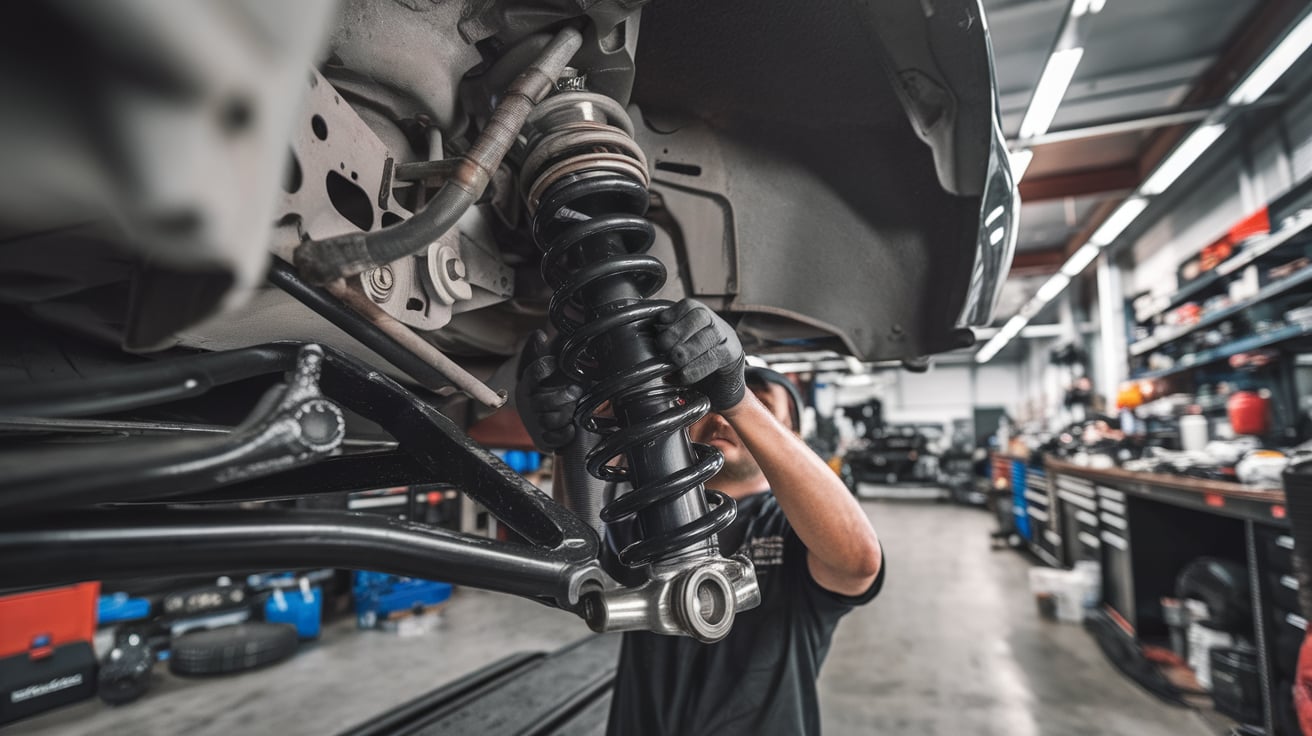
Main Components in a Mercedes Suspension System
Every bump you feel or don’t, comes down to how these parts are working (or wearing out):
- Air Springs or Coil Springs
These hold the car up. If your model has AirMatic, it’s using rubber air bellows instead of traditional steel coils. Once those air bags start leaking, you’ll notice the rear end sagging or the car leaning to one side after being parked. If you’re seeing these signs, it’s essential to check the air suspension system early—learn more about common causes of air suspension failure and how to fix them. - Shock Absorbers & Struts
These keep your car from bouncing like a trampoline after hitting a bump. They control the rebound motion and keep your tires planted on the ground. Bad struts = floating, nose-diving, or jittery rides. - Control Arms & Ball Joints
These are the moving bones of the suspension, letting your wheels move up and down while staying aligned. When the control arm bushings dry up (which they do fast in Dubai heat), you’ll hear clunks, creaks, and feel vibrations in the steering. - Sway Bars (Stabilizer Bars)
Ever taken a fast U-turn in your Mercedes without body roll? That’s thanks to the sway bar. It connects left and right wheels and keeps your car flat while cornering. - Sensors & ECU (Electronic Control Unit)
Your car constantly monitors ride height, acceleration, steering angle, and brake force. The sensors send signals to the suspension ECU, which then tells the system to soften, stiffen, raise, or lower. - Air Compressor or Hydraulic Pump
If you’re in an AirMatic or ABC model, this is what pressurizes the system. When it fails, the car may not lift, or might do it painfully slow. A tired compressor often sounds like a loud buzz near the front wheel arch.
💡 Real Fact: In a Dubai climate, air suspension bellows tend to crack around 90,000–110,000 km, especially if the car is parked outdoors regularly.
How These Components Work Together
The moment you start driving, your Mercedes suspension kicks into action. Every sensor is measuring something: your speed, throttle input, steering movement, even how hard you brake. That data gets processed by the ECU, which then adjusts how stiff or soft the ride should feel. For example:
- You hit a bump → the struts compress, the springs absorb the energy, and the ECU might tell the system to stiffen for better control.
- You brake hard → the system reacts to prevent nose-dive.
- You take a curve fast → it firms up one side to reduce body roll.
The beauty? You never feel any of it, until something breaks.
🚘 Different Types of Mercedes Suspension Systems
Now that you know what’s happening underneath, here’s how it might be configured based on your model:
1. AirMatic Suspension (Air-Based)
Most commonly found in the E-Class, S-Class, GLE, and GLS models.
- Uses air bellows instead of metal springs
- Automatically raises or lowers the car based on speed or terrain
- Lets you switch between comfort and sport modes
- Self-levels even with 5 passengers and a trunk full of groceries
🛠️ What fails most? Air leaks from the bellows or the valve block, causing one side to drop or the entire car to sink after parking overnight.
2. Active Body Control (Hydraulic-Based)
Mostly found in AMG models, SL-Class, S-Class Coupe, this system is next level.
- Uses hydraulic struts filled with pressurized fluid
- Eliminates body roll, dive, and squat
- Reacts within milliseconds
- Driven by a tandem pump that powers both steering and suspension
🛠️ What fails most? Hydraulic leaks from worn hoses or aging accumulators. You’ll see fluid under the car or feel floaty handling.
3. Coil Spring Suspension (Traditional)
Found in base trims or sport-tuned models with a more “mechanical” setup.
- Uses coil springs and gas-filled dampers
- Often paired with Adaptive Damping System (ADS)
- Lower maintenance, but no auto-leveling or height adjustment
🛠️ What fails most? The shocks, and sometimes top mounts, you’ll hear knocking sounds over bumps.
“People think suspension is just for comfort. But in a Mercedes, it’s what keeps the car balanced, predictable and safe, even at 140 km/h on an uneven road.”
— Senior Technician, Mercedes Dubai
Whether you’re floating across Sheikh Zayed Road or creeping through Business Bay traffic, your Mercedes suspension system is doing hundreds of micro-adjustments per minute. But when even one part loses sync, your entire ride feels off. That’s when it is time to stop guessing and start checking.
Common Causes of a Bumpy Ride in Your Mercedes
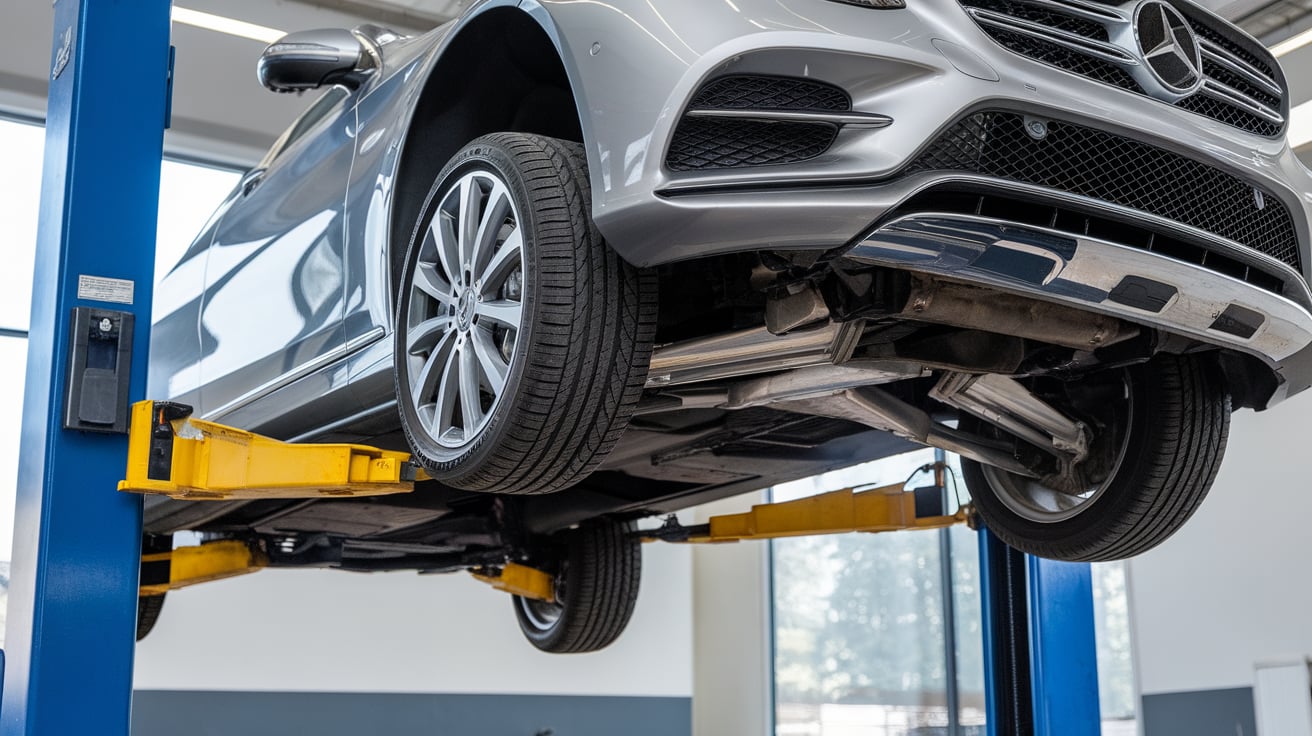
When your smooth luxury ride turns harsh, it’s not just an inconvenience, it’s a mechanical problem waiting to snowball. Every case of a Mercedes bumpy ride has a root cause. And if you’re considering or already searching for a Mercedes suspension repair, understanding what’s failing underneath is the first step toward a solution. From sagging AirMatic systems to control arm wear, here are the most frequent culprits we see in our Dubai garages every single week.
- Leaking or Cracked Air Springs
One of the most common issues in Dubai is air spring failure. These rubber bellows in AirMatic systems dry up, crack, or even burst due to temperature swings and desert heat. The result? The car sags, especially in the rear, and takes longer to lift. If your ride feels unstable or uneven, this is often the first place we check during a Mercedes suspension repair. - Weak or Overheating Suspension Compressor
The suspension compressor feeds air into your AirMatic struts. It works harder in Dubai due to frequent stop-and-go traffic and the added stress from high cabin temperatures. When it starts to fail, you’ll notice your vehicle no longer lifts quickly or at all. A faulty compressor also triggers dashboard suspension warnings. - Worn Control Arm Bushings
These small but essential rubber components isolate your control arms from the chassis. In Dubai, they tend to dry out and tear much faster than in cooler climates. This leads to vibrations through the steering, uneven cornering behavior, and creaking noises over bumps. A full Mercedes suspension repair often includes bushing replacement. - Blown Shocks or Struts
A blown front strut or rear shock absorber ruins stability. You’ll notice excessive bouncing after hitting speed bumps, a squatting rear during acceleration, or nose-diving under braking. In extreme cases, damaged struts reduce road grip and add unnecessary strain on your tires. Replacing shocks is often part of a Mercedes ride quality restoration. - Malfunctioning Ride Height Sensors
In AirMatic and Active Body Control systems, ride height sensors play a vital role. If even one sensor fails or gives faulty data, your car may ride too low, lean to one side, or fail to adjust height at all. Sensor failure leads to miscommunication with the suspension ECU, resulting in a system that does not respond when it should. - Electronic Control Unit (ECU) Glitches
Your suspension control module governs the air compressor, valves, and adjustment timings. Dubai’s climate and voltage fluctuations can sometimes trigger intermittent errors. If your ride feels stuck in comfort or sport mode or unresponsive altogether, a faulty ECU or corrupted sensor data could be the issue. - Bent or Damaged Control Arms
One hard hit to a curb or pothole, can subtly bend your lower control arms. This kind of misalignment causes uneven suspension geometry, bumpy ride feel, and even premature tire wear. Many Mercedes suspension repair jobs involve replacing or realigning these arms to restore handling.
In our Dubai workshop, nearly 7 out of 10 suspension repair jobs involve a mix of air spring leaks and bushing failures, both of which are accelerated by extreme heat and daily speed bump strain.
A Mercedes suspension repair is not something you postpone. Because what starts as a slightly rough ride can quickly damage your tires, affect your braking, and even throw off your vehicle’s alignment. Whether you’re dealing with AirMatic issues, blown struts, or control arm damage, early diagnosis saves money and restores the driving feel your Mercedes was built for.
Typical Symptoms to Watch Before a Mercedes Suspension Repair
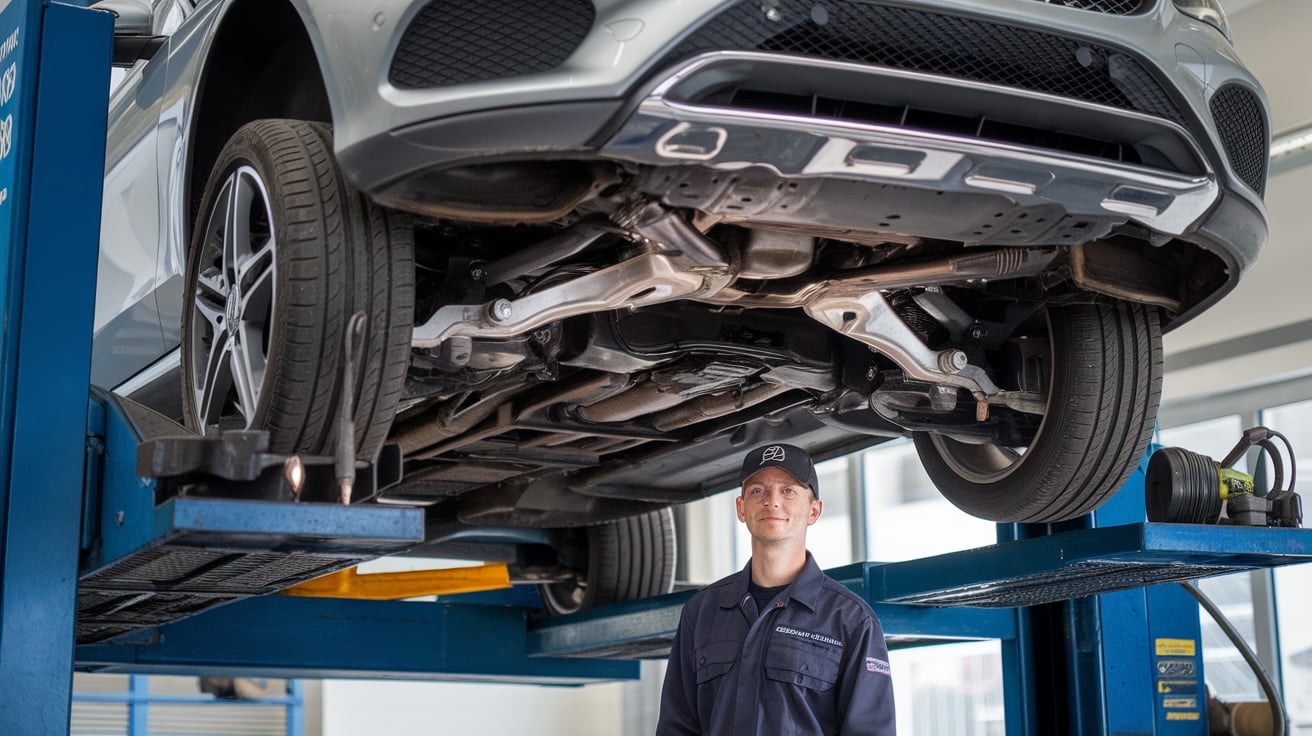
If your Mercedes suspension is failing, the signs will show up in how the car drives, feels, and even sounds. Spotting these early helps avoid costly damage. Here are the key symptoms that indicate it’s time for a Mercedes suspension repair:
- Uneven Ride Height
One side sits lower than the other, usually from air spring leaks or faulty ride height sensors in AirMatic systems. - Bouncy or Harsh Ride
Multiple bounces after speed bumps or a rough feel over smooth roads often means blown struts or failing shock absorbers. - Suspension Warning Light
Messages like “Car Too Low” or “Visit Workshop” usually point to AirMatic compressor failure, valve block issues, or sensor faults. If you’re seeing warning lights, it’s important to get a diagnostic check—here’s how we address check engine light diagnostics and other related suspension issues.” - Creaking, Clunking, or Hissing Noises
Creaks mean worn bushings, clunks suggest control arm wear, and hissing indicates air leaks from the struts or air lines. - Slow or No Height Adjustment
AirMatic systems that take too long to rise, or stay in one position, signal a weak suspension compressor or blocked valve block. - Pulling or Loose Steering
If the car drifts or feels unstable at high speeds, the likely cause is bushing failure, ball joint wear, or control arm misalignment.
These symptoms point to specific faults within your Mercedes suspension system. Addressing them early through proper Mercedes suspension repair helps restore stability, ride quality, and tire life, especially in Dubai’s extreme road and climate conditions.
DIY Checks & Troubleshooting Before Repair
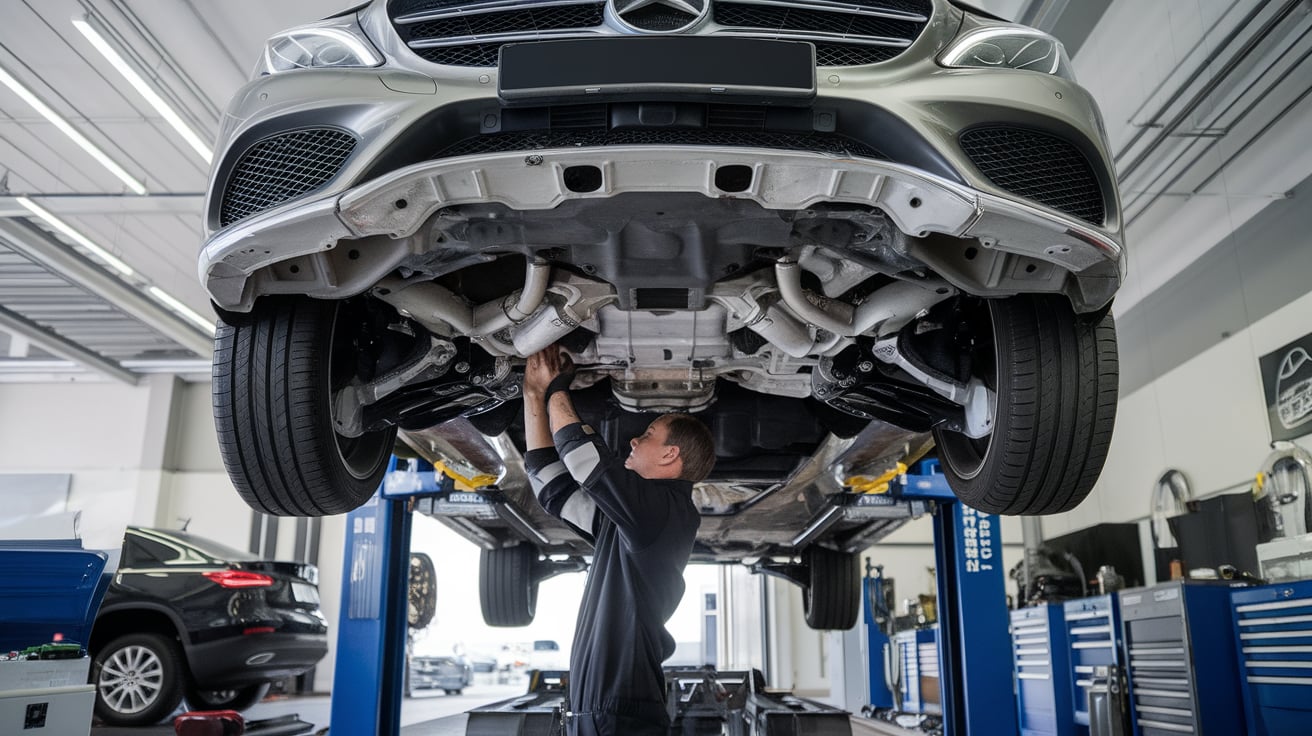
Not every bumpy ride needs a workshop visit, at least not right away. Some early signs of Mercedes suspension issues can be confirmed at home with basic observations. While a full Mercedes suspension repair should always be handled by professionals, these simple DIY suspension checks can help you figure out if something is actually wrong before you book that appointment. Here’s how to inspect your suspension system in a way that’s quick, safe, and useful for diagnosis.
- Check Ride Height After Parking Overnight
Park your car on a flat surface and inspect the wheel arches the next morning. If one corner looks visibly lower, your air spring or height sensor might be leaking or malfunctioning, especially common in AirMatic models. - Listen for Unusual Noises
Start the engine and let the suspension rise. A loud buzzing from the front means your suspension compressor is overworking. Hissing around the wheels? Likely a small air leak in the air struts or lines. - Switch Between Drive Modes
Cycle between Comfort and Sport (or raise/lower the vehicle if equipped). If the height does not change, or the ride stays equally harsh, it may point to valve block issues, compressor failure, or control module errors. - Push Down on Each Corner
Press firmly down on each fender and release. The car should bounce once, then settle. Repeated bouncing means worn shocks or struts, which are common in Dubai due to high-speed bumps and rough roads. - Inspect Under the Car for Fluid or Sagging
Look under the car for oil-like leaks near the struts (hydraulic systems) or dampness around bushings. Also, check for visibly sagging control arms, bent linkages, or damaged rubber mounts. - Test Steering at Low Speeds
Turn the wheel while stationary or at low speed. Any creaking or stiffness could point to bushing wear or ball joint fatigue, both early triggers for poor ride quality.
DIY checks help narrow down the problem, but they don’t replace proper diagnostics. When you notice these signs stacking up, a full Mercedes suspension repair might be closer than you think. Catch it early, and you’ll avoid steering damage, tire wear, and full system failure.
When to Visit a Garage for Mercedes Suspension Repair
You can ignore a squeaky door hinge but you can’t afford to ignore a failing Mercedes suspension system. Once the comfort, handling, or height control starts acting up, it is only a matter of time before it affects safety, tire wear, and steering accuracy. While some issues show up subtly, others demand immediate Mercedes suspension repair, especially if you drive in Dubai’s harsh conditions. Here’s exactly when it’s time to stop guessing and let the professionals step in.
- Car Leans to One Side Consistently
If your Mercedes tilts even on a flat surface, the air spring or ride height sensor is likely damaged. This imbalance can throw off your alignment and lead to uneven tire wear. - Suspension Fault Light on Dashboard
Messages like “Car Too Low” or “Visit Workshop” mean your AirMatic or ABC system has registered a critical fault. These warnings don’t go away on their own and ignoring them risks complete system shutdown. - No Height Adjustment or Mode Change
If switching between Comfort and Sport does not change the ride feel or height, your suspension control module, valve block, or compressor may have failed. This is a common AirMatic problem, especially in Dubai heat. - Fluid Leaks or Hissing Sounds Near Wheel Wells
Any oil seepage from hydraulic struts or hissing air leaks near the wheels signals a failure that needs immediate attention. Ignoring this leads to complete strut collapse or loss of ride control. - Clunking, Knocking, or Vibration While Driving
Persistent noises over bumps or vibrations at highway speed are signs of worn bushings, ball joints, or bent control arms. These parts directly affect steering and stability and must be inspected before the problem worsens. - Repeated Bouncing or Nose Dive During Braking
Excessive bounce after bumps or a forward lurch while braking is often due to blown shocks or struts. This reduces tire contact with the road and increases stopping distance, making your car unsafe.
If you’ve noticed even one of these symptoms more than once, it’s not worth the risk. A proper Mercedes suspension repair can restore your car’s comfort, safety, and balance before other systems start to suffer. Book a diagnostic check today and let expert hands handle what your Mercedes was never meant to tolerate for long rough roads and uncertain handling.